
Heian-jingu
Where Zen Quietly Endures
Established in 1895 to commemorate the 1,100th anniversary of Kyoto's founding, Heian Jingu is dedicated to Emperor Kanmu, who established the imperial capital in 794, and Emperor Kōmei, the last emperor to reign from Kyoto. The shrine honours the city's imperial heritage and its lasting influence on Japanese culture.
Marked by one of Japan's largest torii gates, visitors enter broad courtyards framed by striking vermilion buildings inspired by the original Imperial Palace. Their balanced proportions and restrained elegance reflect the architectural ideals of the Heian period.
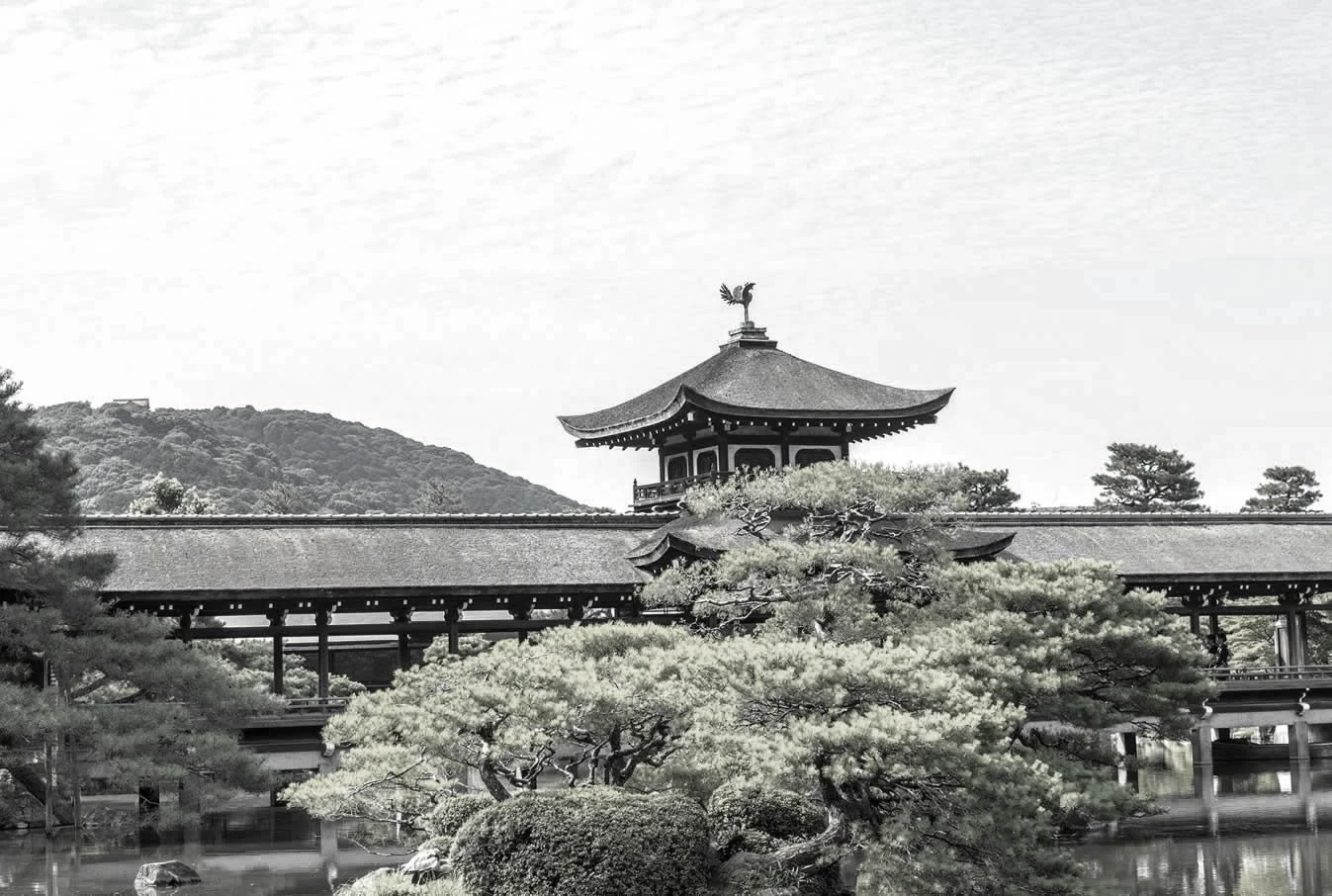
Beyond the main sanctuary, the celebrated Shin'en Garden unfolds through tranquil ponds, graceful bridges and carefully composed seasonal landscapes. From spring's renowned weeping cherry blossoms to the vivid colours of autumn, the gardens offer a changing expression of Kyoto throughout the year.
Each October, Heian Jingu becomes the destination of the Jidai Matsuri (Festival of the Ages), when a grand historical procession retraces more than a millennium of Kyoto's history through period costume, music and ceremony.
Today, Heian Jingu remains one of Kyoto's most significant cultural landmarks, where imperial history, traditional architecture and seasonal beauty come together in a setting that continues to define the city's enduring character.
KIMONO TRADITION
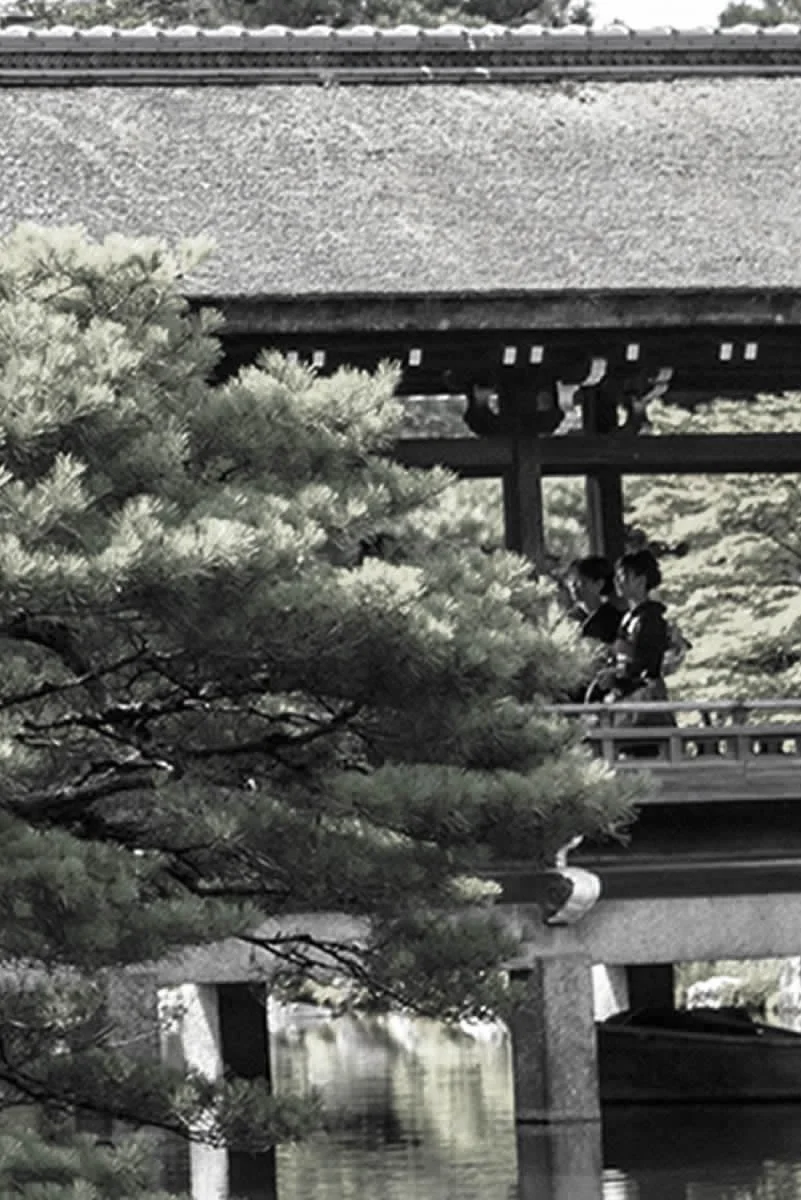
Visitors in traditional attire at Heian Jingu Shrine